
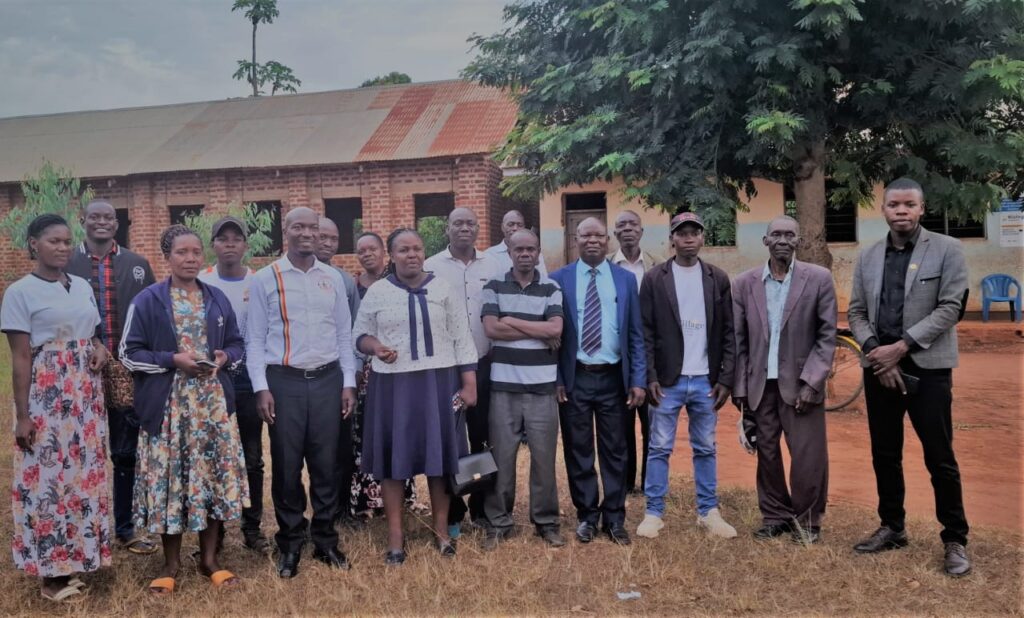
Kamuli — Leaders in Busoga Sub-region are scheduled to launch a soya milk school feeding and digital learning program targeting government primary schools, in a move aimed at improving academic performance by addressing, performance, malnutrition and limited access to modern learning tools.
The program is being implemented by the Busoga Consortium for Development (BCD) in partnership with China Agricultural University and Busoga Kingdom and Busoga Local Governments. The program is one of initiatives under the Village Agriculture Model Program launched by the Vice President of Uganda on 4 August 2024 in Namayingo District. According to the leadership of the BCD, the initiative will start with government primary schools in model villages across the 12 local Governments in Busoga before spreading it across the entire Busoga. The program combines school feeding, agriculture production and digital learning support to improve education outcomes.
Feeding programme rollout
Under the program, 20 soya milk processing machines have been acquired and will be installed in selected government schools to process soya milk for learners. The feeding initiative will be supported by local farmers growing soya beans, while schools have been encouraged to allocate at least two acres of land for soya cultivation in school gardens. Unvailing the program to Busoga leaders at Kamuli District headquarters, BCD Director General Dr Anthony Mula said the initiative is intended to position education as a driver of poverty reduction and economic transformation in line with Uganda Vision 2030. He said the success of the program will lead to sharing of experiences with the rest of the Country for benchmarking.
Poor nutrition affects learning
Education and health stakeholders say poor nutrition remains a major challenge in Busoga. In some areas, stunting among children under five is estimated at up to 46 per cent, while only about one-third of learners in comparable rural settings access regular meals at school. Kamuli District chairperson Ms Sarah Sambya asked farmers to invest more in soya bean production instead of sugarcane, citing its ready market and nutritional value.
Sugarcane dominance linked to education challenges
Despite being one of Uganda’s fertile regions, large parts of Busoga are dominated by sugarcane farming, which stakeholders say has affected household food production.
Education experts say in some sugarcane growing areas, children miss school seasons to work in plantations, contributing to poor academic performance. Recent Primary Leaving Examination (PLE) trends have highlighted the challenge, with some areas registering very few top performers, including cases where some districts fail to register even a minimum of 10 Aggregate 4’s.
Regional education data shows that only about 41 per cent of learners complete primary school, while completion drops to about 7.2 per cent at O-Level and 2.8 per cent at A-Level, reflecting high dropout rates. Literacy levels are also below national averages, with estimates placing Busoga’s literacy rate at about 71 per cent.
Digital learning support
In addition to feeding, BCD has is scheduled to flag off digital learning support in selected rural schools. Working with Hisense Uganda and Chinese development partners, the BCD has distributed 50 digital screens, cameras and internet connectivity kits to support online and digital learning. The program is expected to be launched by the Minister of Education and Sport of Uganda.
Expansion planned
Following the analysis of poor-performing districts, BCD has pledged to extend the Village Agriculture Model Programme to all model villages in Busoga. As schools resume this academic term, the BCD -CAU soya feeding programme is expected to begin under monitoring by the Ministry of Education and Sports through the District Education Officers, Busoga Kingdom Ministries of Education and Agriculture, and implementing partners.
Leaders back the initiative
The school feeding program has received support from First Deputy Prime Minister and Minister for East African Community Affairs Rt Hon Rebecca Kadaga, who has in the past encouraged Government of Uganda, China Agricultural University and other BCD development patners to support the initiative. Kaliro District Production Agricultural Officer Mr Tinkamanyiire Charles asked BCD to prioritize Kaliro District, citing growing demand among farmers for alternatives to sugarcane.
Officials say the program is expected to improve nutrition, increase school attendance and improve learning outcomes in the region